
Guides
Wedding Dress Alteration Timeline: When to Book in Singapore
When to book wedding dress alterations in Singapore: first fitting six to eight weeks ahead, how many fittings to plan for, what to bring, and what is still possible if the wedding is close.
Almost every gown can be made to fit. The part brides run out of is not fabric — it is time. A dress bought early, then brought in with ten days to spare, can leave too little room for the work and the fittings it needs.
This is the timeline in plain terms: when to book your first fitting, how the appointments are sequenced, what to bring, and what is still possible if your wedding is closer than you would like. For what the work costs, our wedding dress alterations guide covers the pricing in full.
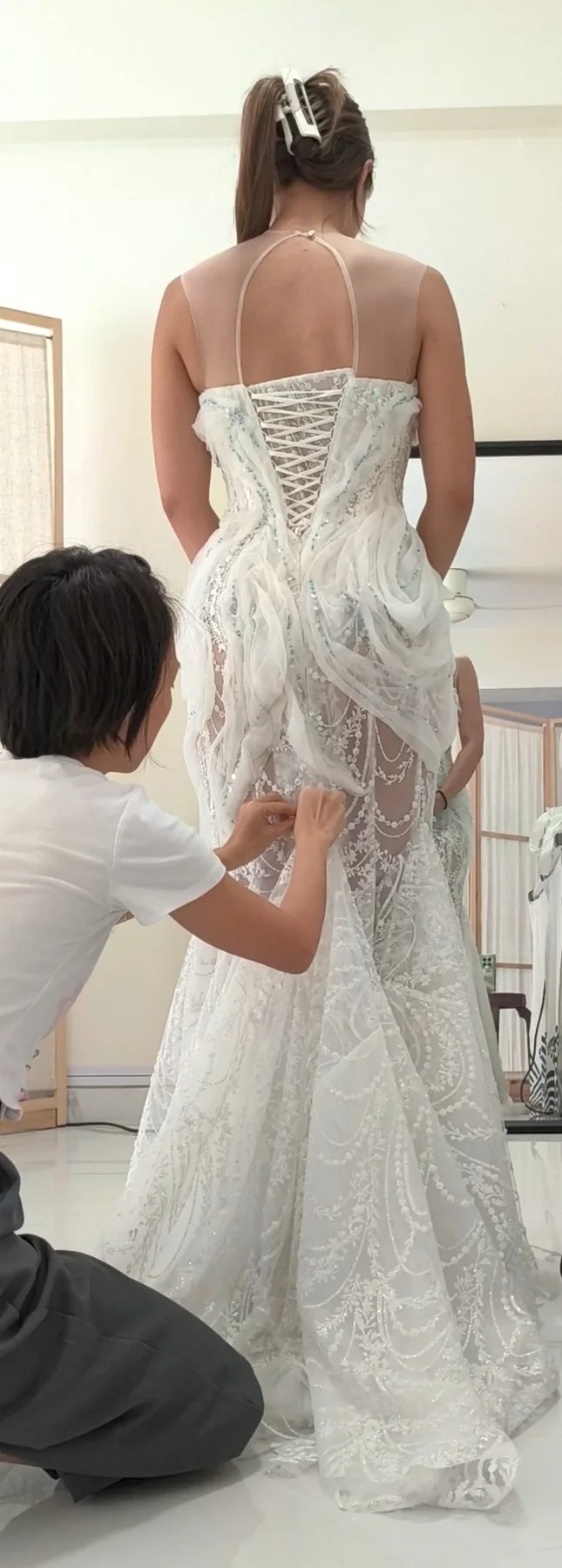
The Short Answer
Book your first fitting six to eight weeks before the wedding.
That window is not arbitrary. It holds two fittings, the sewing time between them, and a buffer if something needs revisiting before the wedding.
Earlier is not automatically better. A gown fitted three months out is usually re-fitted closer to the day anyway, because bodies change in the final weeks and hem length is measured to the shoes you may not have bought yet. The useful thing to do early is secure the appointment, not have the fitting.
The Full Timeline
| When | What happens | Why it matters |
|---|---|---|
| Before the first fitting | Gown in hand; message us with photos and your wedding date to ask about fitting availability | Gives you time to plan around the recommended fitting window |
| 6–8 weeks before | First fitting. The gown is pinned on your body, the work is discussed, and you receive the quote before anything begins | This is the recommended window for planning bridal work |
| Between fittings | The agreed work is carried out — hem, bodice, straps, bustle, and each layer as the gown requires | The construction determines how much work and time are involved |
| After the first fitting | Second fitting. You try the altered gown and anything that has shifted is refined | Confirms the fit before collection |
| Before the wedding | Final refinements if needed, then collection once the fit is confirmed | Leaves the gown ready for the day |
| Under 1 week | Express territory — simple work only, subject to a slot | Possible, but priced at 1.5x to 2.5x and never guaranteed |
Standard alteration turnaround is around two weeks from fitting to collection. Gowns generally need longer, because a gown is rarely one alteration — a hem, a bodice adjustment and straps or a bustle are usually one job, and a lined or multi-layer skirt is worked layer by layer. The garment’s construction and the available schedule determine the timing, which is why the work is assessed and quoted at the fitting.
The gap between your two fittings is not slack in the schedule. It is the sewing.
What Happens at Each Fitting
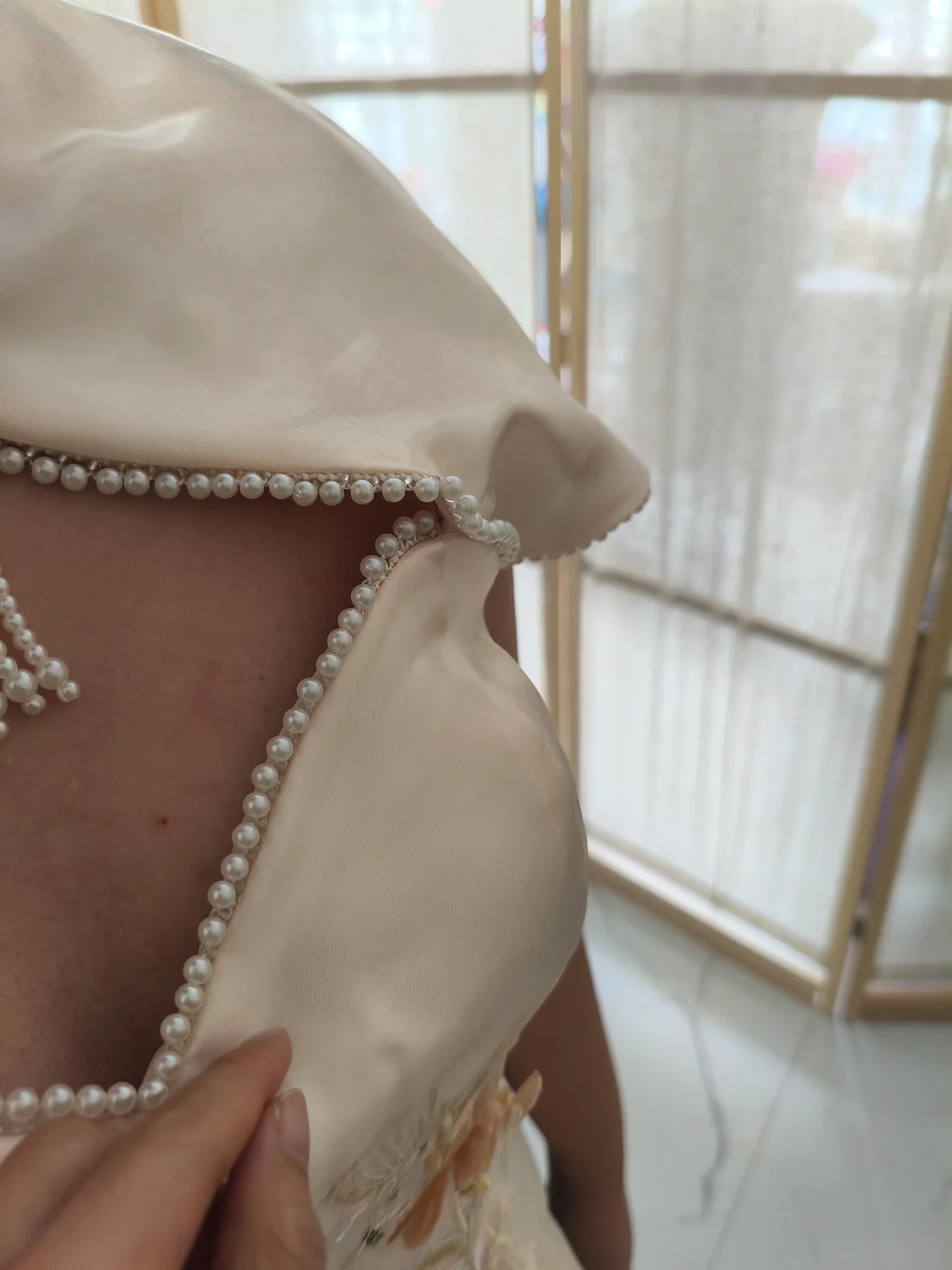
The first fitting
You wear the gown, we pin it on your body, and we go through what needs doing and what the gown structurally allows — including anything we would advise against. You leave with a firm price before anything is cut or unpicked, and you are free to take the gown away exactly as you brought it.
It is worth coming with a sense of what bothers you about the fit; even "it gapes at the back" is enough to start from.
The second fitting
You try the altered gown, we confirm the fit, and refine anything that has moved since the first appointment. For most gowns this is the last step. Heavily structured pieces, and gowns taken in more than one size, sometimes need a third fitting — which is another reason the six-to-eight-week window is worth protecting.
Collection
Standard practice is to collect once you have seen the gown on and confirmed the fit. Please do collect promptly rather than leaving it with us indefinitely: our terms ask for collection within 30 days of the ready notification.
What to Bring — Every Time
- Your wedding shoes. Hem length is measured to the shoe. A different heel height changes everything below the knee, and this single detail causes more re-work than anything else.
- The undergarments you will wear on the day. A different bra changes the bodice fit, and the bodice is usually the fussiest part of the job.
- Any structured accessory — a belt or sash — that changes where the gown sits at the waist.
- Your wedding date, which determines whether standard or express pricing applies.
- A second outfit, if you have one. If there is a qipao, a kebaya or an evening dress for the banquet or tea ceremony, bring it to the same appointment and we will quote both together rather than starting a separate job later.
What It Costs, Briefly
Bridal is quoted as a whole job after a fitting, not from a fixed menu. Gown work starts from S$120 for a simple, single-layer dress, from S$350 for a typical lined gown with a structured bodice, and from S$500 for complex work — multi-layer skirts, beading or lace along the seams, or resizing beyond one size.
Individual adjustments can be priced on their own: a multi-layer or lace-edged hem from S$200, a bustle addition S$100 to S$200, a boned or beaded bodice take-in S$60 to S$120. Everyday dress alterations start from S$15.80, and our dress alteration cost guide explains what drives those ranges.
If the Wedding Is Sooner Than Eight Weeks
Do not assume it is too late. Assume it is a different conversation.
- Four to six weeks — still worth asking about; the answer depends on the gown’s construction and the available schedule.
- Two to four weeks — simpler work may be possible, but layered, boned or beaded gowns need an assessment before a timeline can be given.
- Under two weeks — express alterations at 1.5x within 5 working days, 2x within 3 days, or 2.5x within 24 hours, subject to an available slot. Simple hems and take-ins rush best; very complex bridal restructuring may not be feasible on an express timeline at all.
Express slots can be unavailable during peak periods, so the earlier you ask, the more honest an answer we can give you. Message us with photos of the gown and your date, and we will tell you what is genuinely achievable before you commit to anything.
After the Day
Most brides clean the gown after the wedding rather than before it — cleaning beforehand means paying to clean fabric that may be cut away, and fitting-room handling undoes a fresh clean anyway. Wedding gown dry cleaning starts from S$120; message us about the cleaning stage once the wedding is over.
Stitch & Steam is a by-appointment studio at 126C Canberra Street, Singapore 753126 — 10 minutes from Canberra MRT and one stop from Yishun, with easy reach from Sembawang, Woodlands and Admiralty. Appointment-only means an unhurried fitting with the same pair of hands each time, which matters more on a gown than on anything else you will ever wear.
WhatsApp us your wedding date and a photo of the gown and we will tell you what the timeline allows, honestly, before you book. Everything else we do to gowns and dresses is on our dress alterations page.
Frequently Asked Questions
When should I get my wedding dress altered in Singapore?
Book your first fitting six to eight weeks before the wedding. That window allows for two fittings, the sewing time in between, and a buffer if something needs revisiting. Four weeks is workable for simpler gowns. Under two weeks usually means express rates, subject to an available slot. Booking much earlier than eight weeks is not automatically safer either — a gown fitted three months out often has to be re-fitted closer to the day anyway, because measurements change in the final weeks and hem length is measured to the shoes you may not have bought yet. Ask us early about availability, then hold the fitting itself inside that six-to-eight-week window.
How long do wedding dress alterations take?
Standard alteration turnaround at Stitch & Steam is around two weeks from fitting to collection. Wedding gowns generally need longer than that, because a gown is rarely one alteration — a hem, a bodice adjustment and straps or a bustle are usually handled as one job, and every layer of a lined or multi-layer skirt is worked separately. How long a particular gown takes depends on how it is built and on what slots are free, so the timing is discussed after the gown has been assessed rather than promised from a photo. That is why the first fitting is best held six to eight weeks out: it leaves room for the work and for a second fitting.
How many wedding dress fittings do I need?
Two for most gowns — the first to pin the gown on your body and agree the work and the price, the second to confirm the result once the sewing is done. Heavily structured gowns, and gowns being taken in more than one size, sometimes need a third. The gap between the two is not padding: it is the sewing time, and compressing it is what turns a standard booking into an express one. How far apart the two fittings sit is agreed at the first one, once we can see what the gown needs.
What should I bring to a wedding dress fitting?
Your wedding shoes and the undergarments you will actually wear on the day, to every fitting — hem length is measured to the shoe, so a different heel height changes everything below the knee, and a different bra changes the bodice fit. Bring any structured accessory that affects how the gown sits, such as a belt or sash, and your wedding date, since it determines whether standard or express pricing applies. If you have a second outfit for the banquet or tea ceremony, mention it when you book so we can tell you what to bring.
Can a wedding dress be altered in a week in Singapore?
Sometimes, at express rates — 1.5x the standard price within 5 days, 2x within 3 days, or 2.5x within 24 hours, subject to an available slot. Simple hems and take-ins are the most rushable. Heavily layered, boned or beaded gowns are the least, and very complex bridal restructuring may not be feasible on an express timeline at all. Express slots can also be unavailable during peak periods, so message us with photos and your date rather than assuming it is either impossible or fine.
What if my weight changes between fittings?
That is normal in the final weeks before a wedding, and it is exactly why the second fitting exists. Tell us at the first fitting if you expect your measurements to shift, and mention any change when you come back — the second fitting is where the fit is confirmed and refined. How much a gown can absorb depends on its seam allowance and construction, which we check on the garment itself rather than guess at. It is also the reason we would rather fit you six to eight weeks out than three months out.
Written by Stitch & Steam
Premium clothing alterations and dry cleaning in Canberra, Singapore. Book your appointment today.