
Pricing
Wedding Dress Alterations in Singapore: Cost, Timeline & Fittings
Wedding dress alterations in Singapore — what gown work costs, how far ahead to book, how many fittings you need, and what can and cannot be altered.
The most common regret we hear from brides is not about the gown — it is about the timing. A dress bought months in advance, then brought in for alterations with ten days to spare, when the work needed three weeks and two fittings to do properly.
Your gown is almost certainly alterable. The question is whether there is enough time to do it well. This guide covers what wedding dress alterations cost in Singapore, how far ahead to book, what happens at each fitting, and what a gown will and will not allow.
What Wedding Dress Alterations Cost
Bridal is priced differently from everyday dresses. A gown is not one alteration — it is usually a hem, a bodice adjustment, and straps or a bustle, across two fittings — so it is quoted as a whole job after a fitting, not from a fixed menu.
| Gown | What it involves | From |
|---|---|---|
| Simple | Unlined or single layer — hem plus a light take-in | from S$120 |
| Typical | Lined, structured bodice — hem, bodice, and straps or a bustle | from S$350 |
| Complex | Multi-layer, beading or lace along the seams, resizing beyond one size | from S$500 |
| Gown dry cleaning (best done after the day) | from S$120 | |
Where your gown lands depends on its construction, not its price tag — a simple silk sheath can cost less to alter than a beaded high-street dress.
If you only need one thing done, individual gown adjustments are priced on their own:
| Individual adjustment | Price |
|---|---|
| Hem — multi-layer or lace-edged | from S$200 |
| Bustle addition | S$100 – 200 |
| Bodice take-in — boned or beaded | S$60 – 120 |
| Straps, sleeves, neckline | quoted at fitting |
Everyday dress rates are on the rates page, and the dress alteration cost guide explains what drives those ranges.
A bridal quote should always come after a fitting, never over text. Anyone pricing your gown from a photo is guessing.
The Timeline: When to Book
This is the part worth planning around.
- Six to eight weeks before — book your first fitting. This is the comfortable window: two fittings, sewing time in between, and a buffer if anything needs revisiting.
- Four weeks before — workable for most gowns, tighter for heavily layered or beaded ones.
- Two weeks before — likely express rates (1.5x to 2.5x depending on the window), and subject to an available slot.
- Under one week — sometimes possible for simple work, often not during peak wedding season. Ask early rather than assuming either way.
Two things brides underestimate: gowns take longer than everyday dresses because every layer is handled separately, and weight changes in the final month are normal — which is exactly why the second fitting exists, and why booking the first one too early can be as unhelpful as booking it too late.
What Happens at Each Fitting
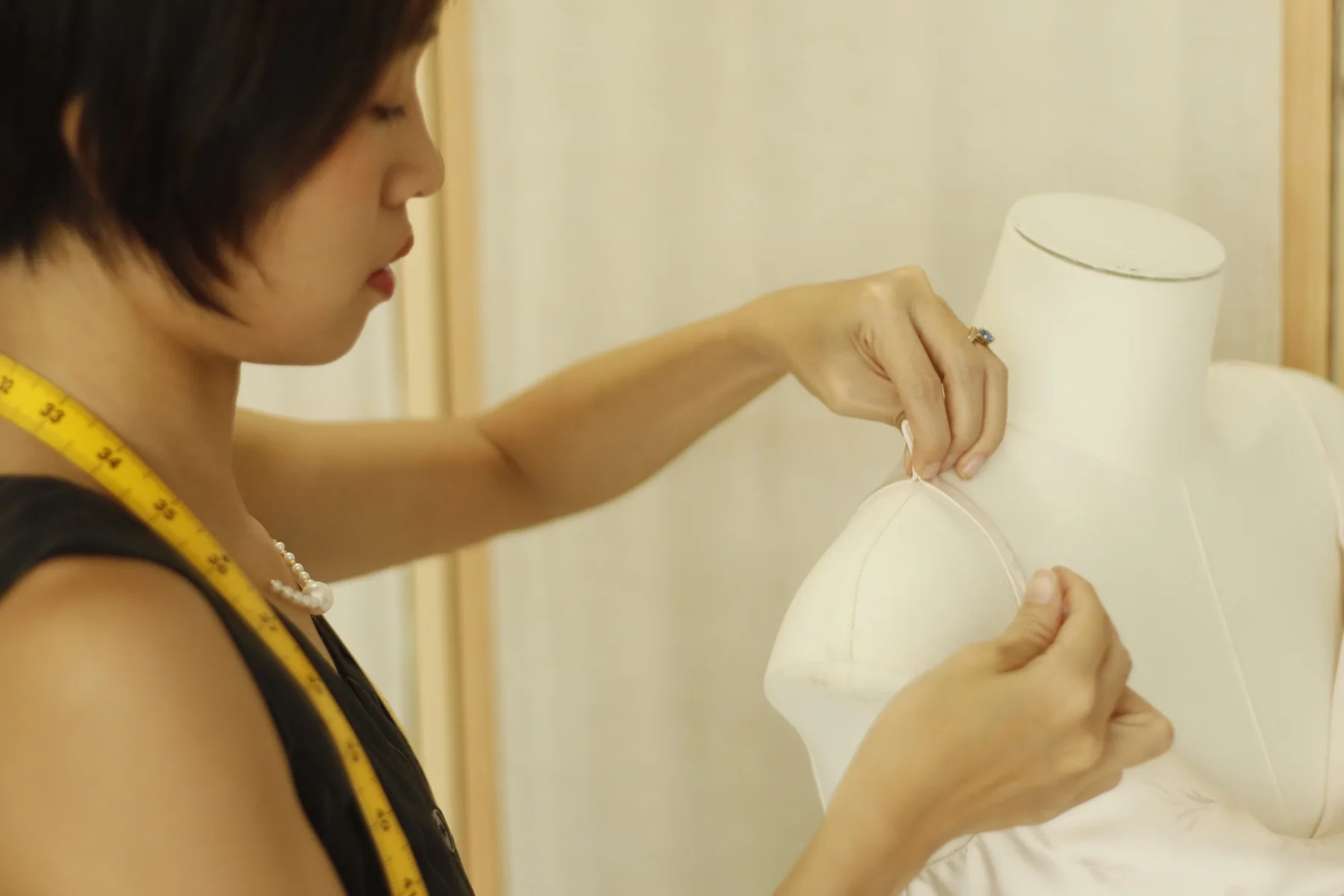
Bring your wedding shoes and the undergarments you will wear on the day, to every fitting. Hem length is measured to the shoe. A different heel height changes everything below the knee, and a different bra changes the bodice fit. This single detail causes more re-work than any other.
First fitting. You wear the gown, we pin it on your body, and we go through what needs doing and what the gown structurally allows. You get a firm price before anything is cut or unpicked — and you are free to walk away with the gown exactly as you brought it.
Second fitting. You try the altered gown, we confirm the fit, and refine anything that has shifted. For most gowns this is the final step. Heavily structured pieces, or gowns being taken in significantly, sometimes need a third.
What Can and Cannot Be Altered
Most of what brides worry about is fixable:
- Length — hemming, including multi-layer and lace-edged hems
- Bodice — taking in or letting out at the waist, bust and back
- Straps and neckline — shortening straps, adjusting shoulders, raising or lowering a neckline
- Bustles — adding a bustle so the train lifts for the reception
- Repairs — zips, seams, loose beading
The honest limits:
- Letting out depends entirely on the seam allowance the maker left inside. Some gowns have generous allowance; some have almost none. We check this at the fitting before promising anything.
- Heavy beading and lace along a seam must be removed by hand and reattached after — possible, but it is slow, skilled work and the quote reflects it.
- Changing the silhouette — turning a ballgown into a sheath, for instance — is closer to remaking the dress than altering it, and is rarely worth the cost.
If your piece is a traditional or cultural gown rather than a Western one, our baju kurung alteration guide covers that work specifically.
Choosing Who Alters Your Gown
You get one shot at this, so the selection criteria are stricter than for everyday clothes. Look for someone who fits the gown on your body rather than working from measurements, quotes only after that fitting, and tells you plainly when something is not advisable. A tailor willing to say "I would not do that to this gown" is worth more than one who says yes to everything. Our guide on seamstress vs tailor covers what else to look for.
Stitch & Steam is a by-appointment studio at 126C Canberra Street in North Singapore — one MRT stop from Yishun, and a short ride from Sembawang, Woodlands and Admiralty. Appointment-only means your fitting is unhurried and with the same pair of hands each time, which matters more on a gown than on anything else you own.
Before You Book
Have these ready and your first fitting will be far more productive:
- Your wedding date — it determines whether standard or express applies
- Your wedding shoes and the undergarments you will wear
- Photos of the gown, front and back, if you are messaging ahead
- A sense of what bothers you about the fit — even "it gapes at the back" is enough to start
Book a fitting on WhatsApp with your date and a photo of the gown, and we will tell you honestly what is possible in the time you have — before you commit to anything. See the full range of what we do on our dress alterations page.
Frequently Asked Questions
How much do wedding dress alterations cost in Singapore?
Wedding gown alterations at Stitch & Steam start from S$120 for a simple gown, from S$350 for a typical lined gown with a structured bodice, and from S$500 for complex work — multi-layer skirts, beading or lace along the seams, or resizing beyond one size. Individual adjustments can also be priced on their own: a multi-layer hem from S$200, a bustle S$100 to S$200, a boned or beaded bodice take-in S$60 to S$120. Every gown is quoted after a fitting, so you get a firm total before any work begins.
How far in advance should I book wedding dress alterations?
Book your first fitting six to eight weeks before the wedding. That allows for two fittings with sewing time in between, plus a buffer if something needs revisiting. Four weeks is workable for simpler gowns. Under two weeks usually means express rates, and under one week may not be possible at all during peak season.
How many fittings does a wedding dress need?
Usually two. The first is where we pin the gown to your body and agree the work and the price. The second confirms the result and catches anything that needs refining. Heavily structured gowns, or gowns being taken in more than one size, sometimes need a third. Bring your wedding shoes and undergarments to every fitting.
Can a wedding dress be taken in more than one size?
Often yes, but it depends on the gown. Taking in two sizes or more usually means reworking multiple seams, and on a beaded or boned bodice the structure has to be dismantled and rebuilt. That is possible but it is real work, and the price reflects it. We assess the seams and boning at your fitting and tell you honestly what the gown will allow.
Should I dry clean my wedding gown before or after alterations?
After. Alter first, then clean — cleaning a gown before it is altered means paying to clean fabric that may be cut away, and pinning marks or handling during fitting can undo a fresh clean. Wedding gown dry cleaning starts from S$120. Most brides clean after the wedding rather than before it.
Can you alter a wedding dress in a week?
Sometimes, at express rates — within 5 days at 1.5x, 3 days at 2x, or 24 hours at 2.5x the standard rate, subject to an available slot. Simple hems and take-ins are the most rushable. Heavily layered or beaded gowns are the least. Message us with photos before you assume it is impossible, and before you assume it is fine.
Written by Stitch & Steam
Premium clothing alterations and dry cleaning in Canberra, Singapore. Book your appointment today.